Disclaimer: This post is for educational and informational purposes only and does not provide financial advice or investment guidance.
Introduction
Digital corporate portals are widely used across organizations to centralize internal information, tools, and resources. These platforms are designed to support structured access to workplace content while maintaining clarity, consistency, and usability. This article provides an educational overview of what digital corporate portals are, how they are typically structured, and why they play an important role in modern organizational environments.
The goal of this post is to explain general concepts and design principles without referencing or replicating any specific proprietary system.
What Is a Digital Corporate Portal
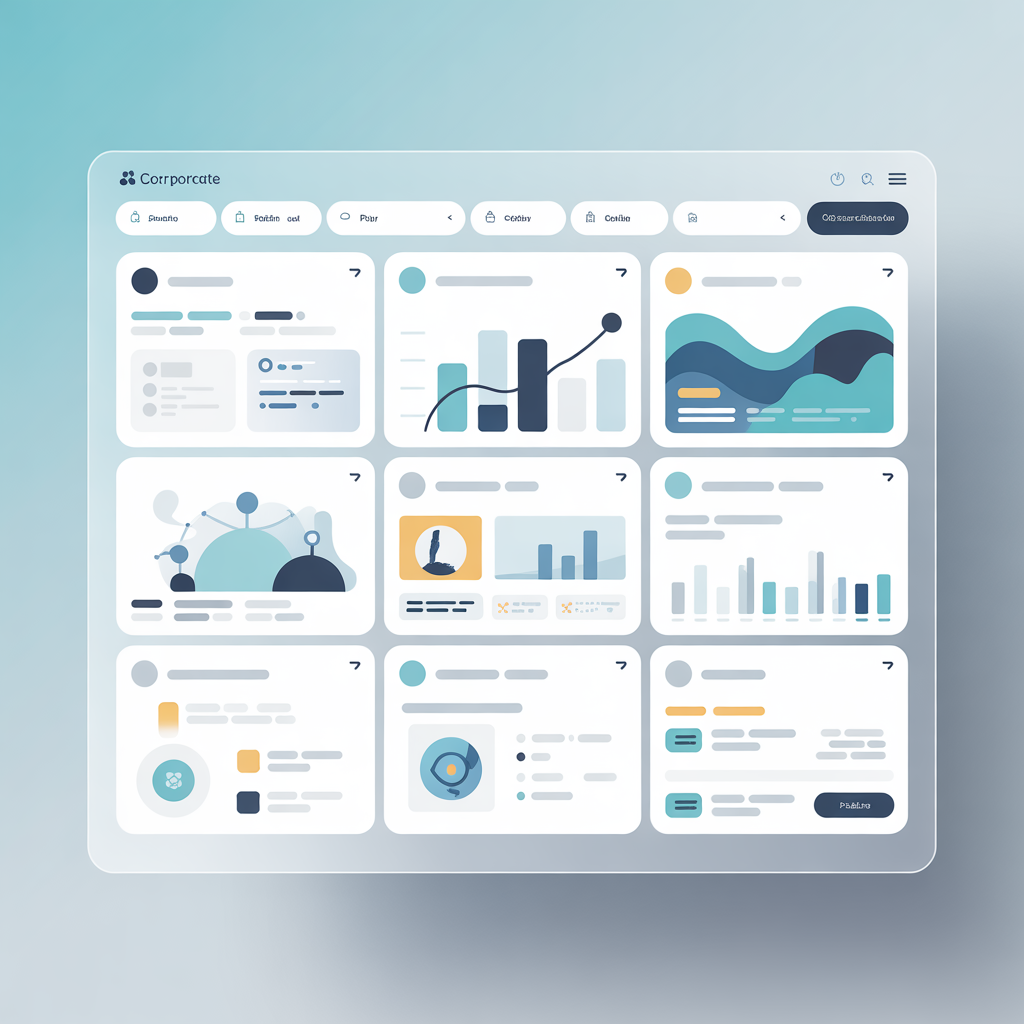
A digital corporate portal is an internal-facing platform that brings together various informational sections into a single interface. It often serves as a central point where users can view announcements, navigate to internal pages, and access shared documentation.
Such portals are commonly used in large organizations where information needs to be presented in a structured and standardized manner. Rather than functioning as a public website, these platforms focus on internal clarity and organized content delivery.
In many discussions, these systems are also referred to as corporate hubs, digital hubs, or internal workspaces.
Common Structural Elements of Corporate Portals
Although layouts vary, most corporate portals share similar structural components:
Central Dashboard
The dashboard is typically the first screen users encounter. It provides a high-level overview of available sections, updates, or informational panels.
Navigation Menus
Navigation menus are designed to organize content into logical categories. These menus may appear horizontally, vertically, or as expandable sections depending on the interface design.
Informational Sections
Portals often include sections dedicated to internal updates, reference materials, or procedural explanations. These areas are designed for clarity rather than promotion or interaction.
Visual Hierarchy
Consistent spacing, typography, and color usage help guide users through content without overwhelming them. This is especially important in enterprise environments where information density can be high.
How Corporate Hubs Support Information Access
Corporate hubs are designed to reduce fragmentation by consolidating resources into a single environment. Instead of navigating multiple disconnected systems, users can rely on one structured platform to locate information efficiently.
Terms such as employee central, digital hubs, or corporate hubs are often used to describe this centralized approach. Regardless of naming conventions, the core principle remains the same: structured access to internal content.
Design Principles Behind Digital Portals
Effective digital portals are built with several key principles in mind:
- Consistency: Repeating layout patterns improve usability
- Clarity: Clear labeling helps users understand where information is located
- Scalability: The structure allows new sections to be added over time
- Neutral Presentation: Content is displayed informatively rather than persuasively
These principles help ensure that the portal remains useful as organizational needs evolve.
Educational Perspective on Portal Navigation
From an educational standpoint, understanding portal navigation involves recognizing patterns rather than memorizing steps. Users benefit when interfaces follow predictable structures, such as grouped sections and logical page hierarchies.
Informational platforms like the hub fca or chrysler hub are often discussed in educational contexts as examples of how large-scale portals organize content, without implying direct usage or endorsement.
Conclusion
Digital corporate portals serve as structured environments for presenting internal information. By focusing on layout, navigation, and clarity, these platforms help organizations maintain consistency across complex systems. Understanding their general structure and purpose allows readers to better interpret how enterprise platforms are designed, without relying on any specific service or implementation.
Disclaimer: This post is for educational and informational purposes only and does not provide financial advice or investment guidance.
